- Natural Sciences Home Page
- Physics Department
- hidden
- Department of Mathematics
- Department of Statistics
- School of Life Sciences

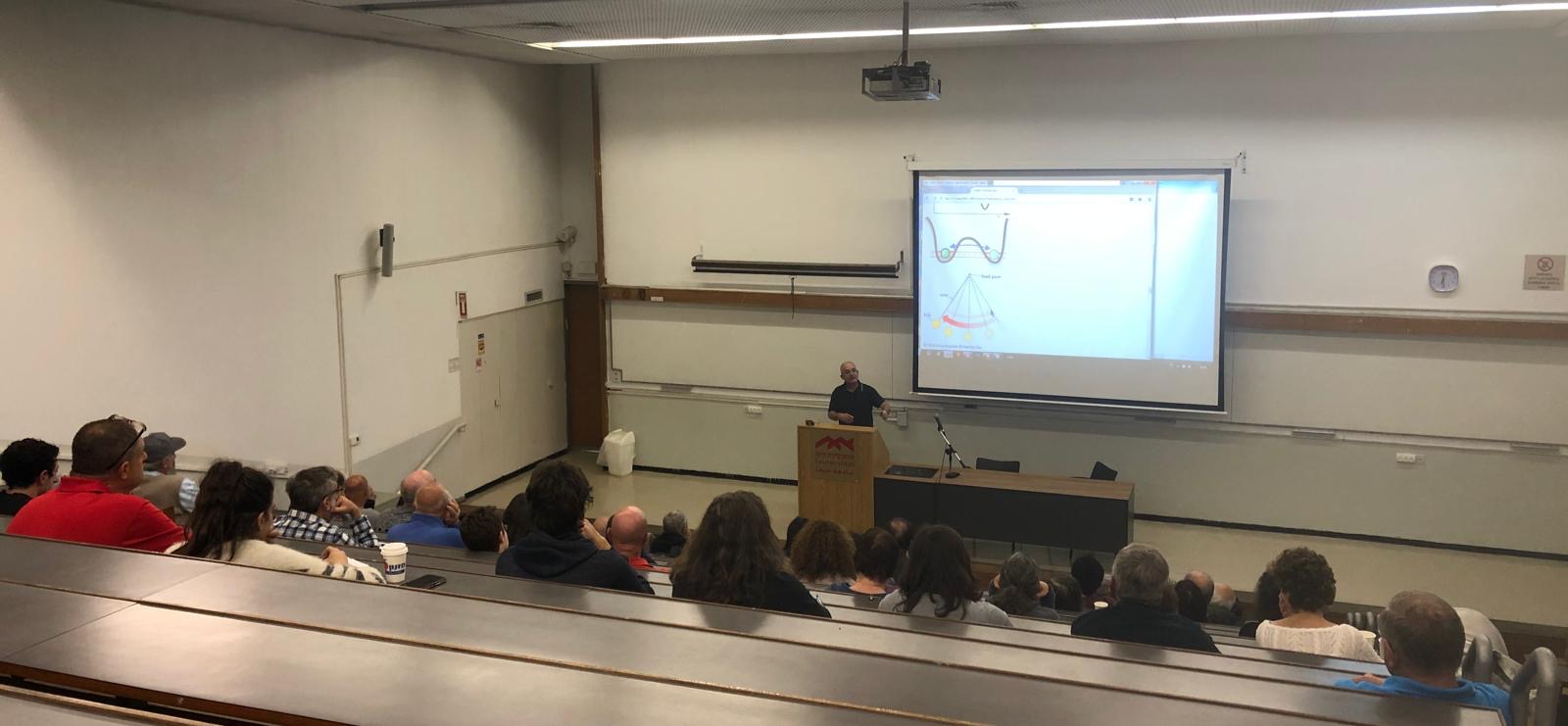
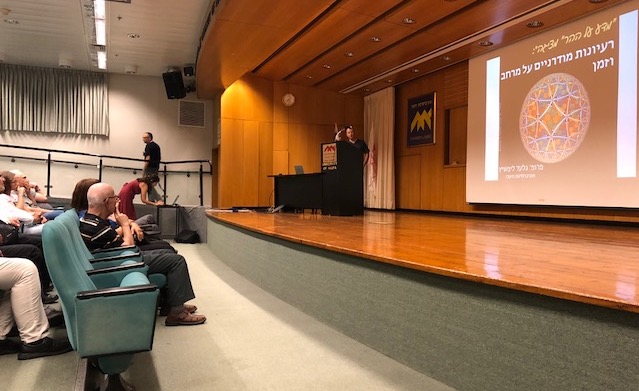
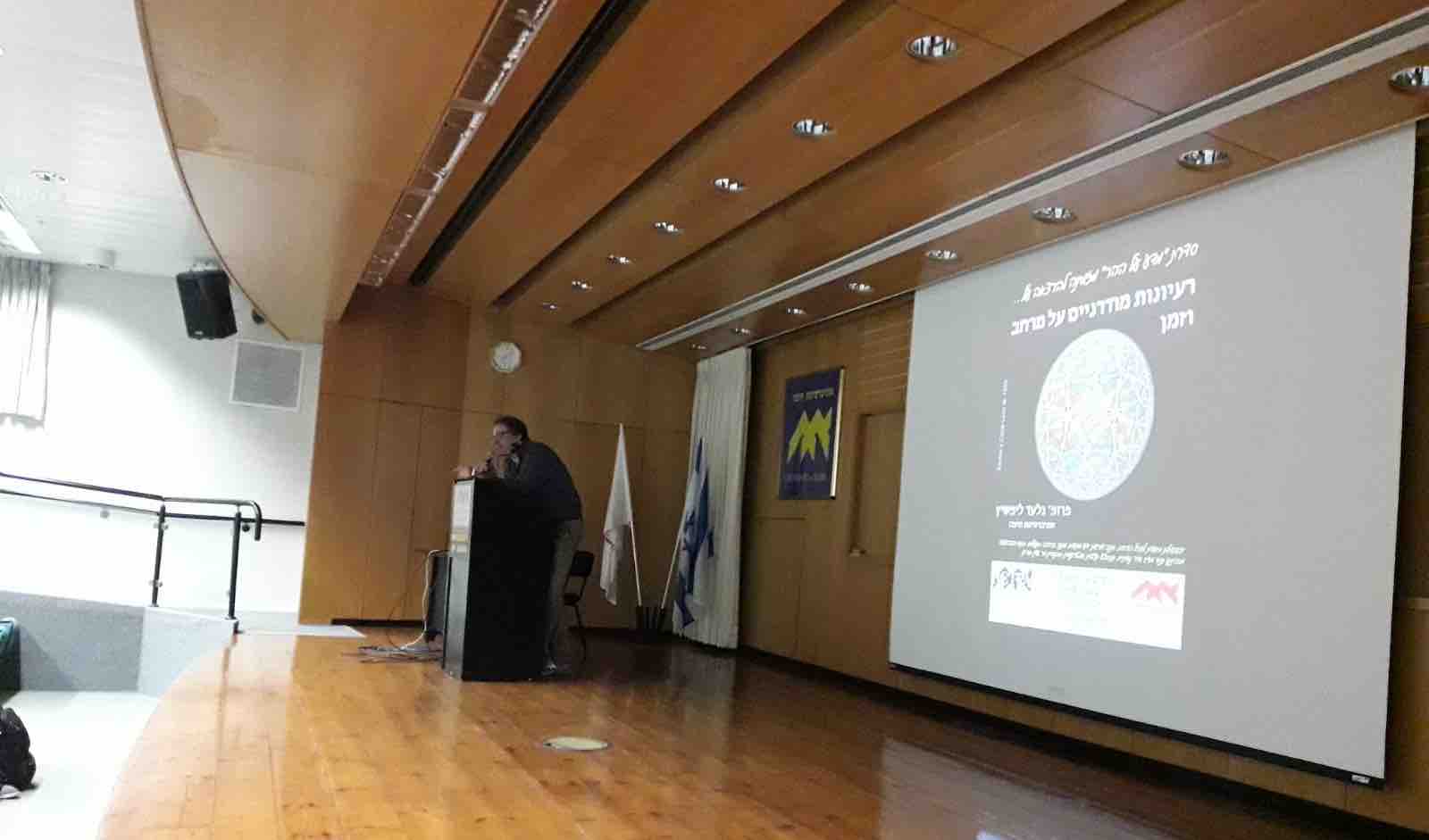
The Department of Physics sponsors a lecture series at the University of Haifa called “Science on the Mountain.” The lectures are open to the general public and are given in the winter and spring semesters about once a month on the university campus on Mount Carmel (in the Multipurpose Building, Spadia Auditorium). If weather conditions permit, at the end of the lectures an astronomical observation of the night sky is held with a guide. The lecturers include University of Haifa faculty members and their guests from Israel and abroad.
The lectures are given in Hebrew and free of charge. No prior knowledge of physics is required from the audience.
To join the mailing list, please enter your email address here.
“Science on the Mountain” events are suspended until further notice.
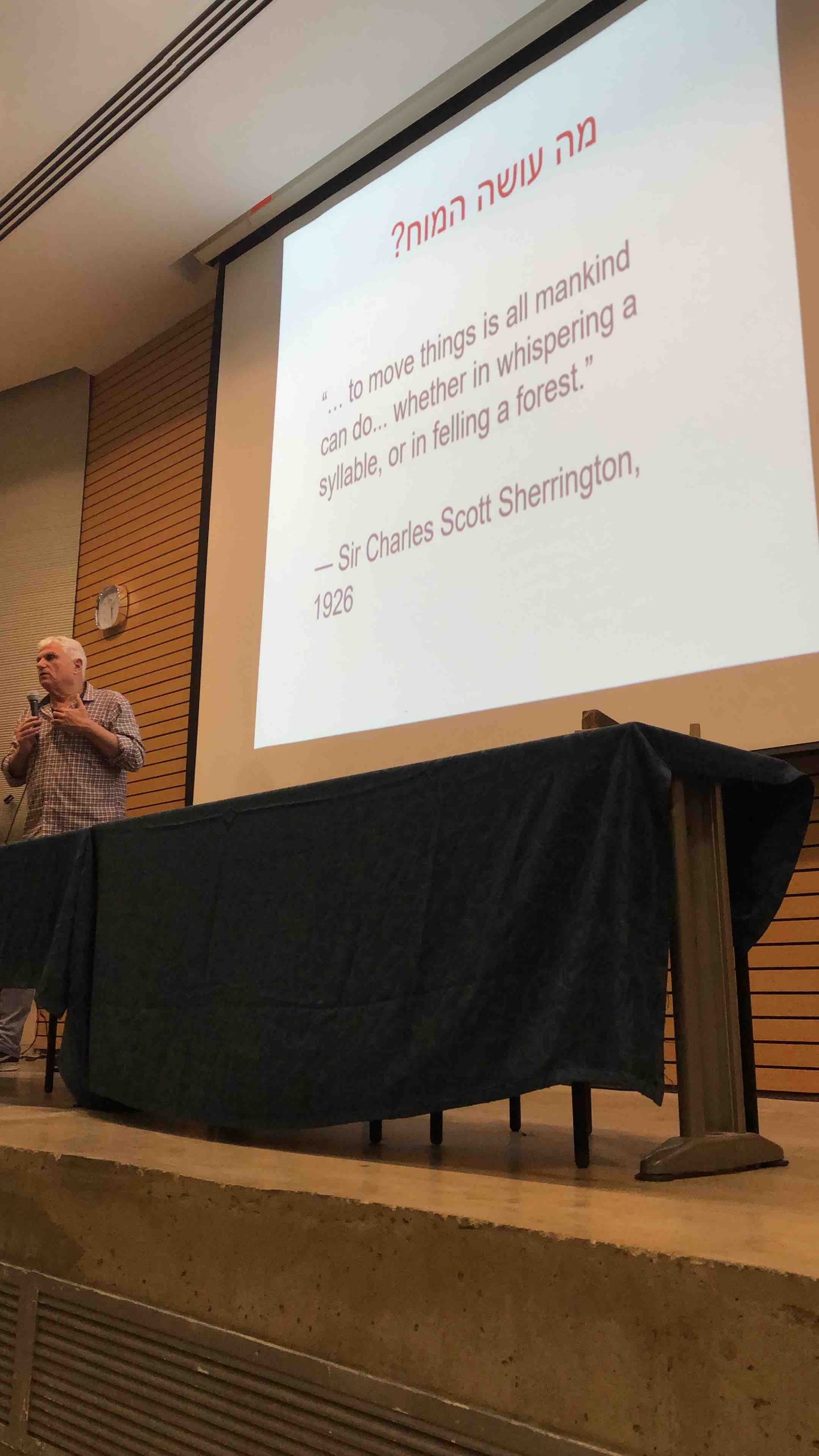
The lecture begins by explaining the difference between the approach of the natural sciences to behavioral phenomena, including memory, and the way philosophers, writers, poets, and historians approach them. It continues with a description of the properties of memory and then of the mechanisms by which the brain creates memories and stores them. At the end there is a short discussion of the limitations of the scientific approach.
Classical mechanics reached a dead end at the end of the 19th century when attempts were made to understand the motion of the stars in the solar system (the “three-body problem”), and it was pushed into a corner at the beginning of the 20th century by quantum mechanics. Only in the middle of the 20th century did people begin to understand how to deal with the chaos that characterizes classical dynamics. In the meantime, during the quantum revolution, the emphasis was on atomic physics, in which chaos is almost not expressed. At the beginning of the 21st century the recognition took shape that quantum mechanics would bring a “second technological revolution” in which complex devices, not necessarily microscopic, would be realized for various purposes (quantum detectors, quantum computing…). This complexity brings chaos back to center stage. In the lecture we will see that classical mechanics is relevant not only for understanding the dynamics of stellar systems and mechanical toys, but also for the quantum analysis of atomtronic systems, in which atoms replace the role that electrons have in electrical circuits.
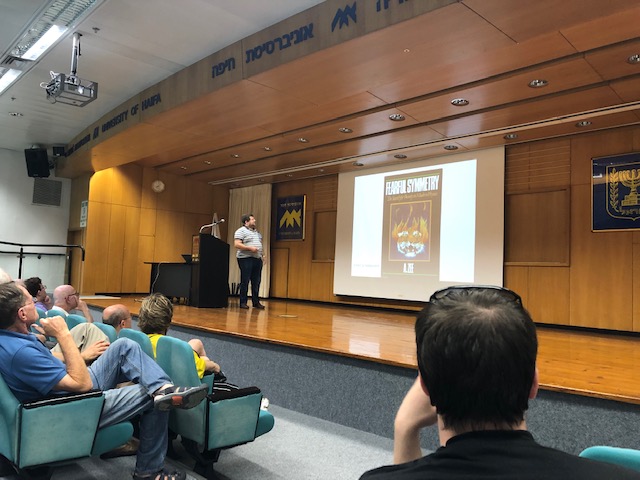
The collection of experimental facts about elementary particle physics, also known as “high-energy physics,” can be explained, with a greater or lesser degree of success, by a hierarchy of theories arranged on a scale of increasing energies, which become simpler and simpler as one climbs the energy scale. The guiding principle in constructing these theories is the principle of symmetry. In this lecture I will explain, in terms accessible to everyone, what the concept of “symmetry” means in its physical context and why it is the key to understanding the fundamental structure of the universe.
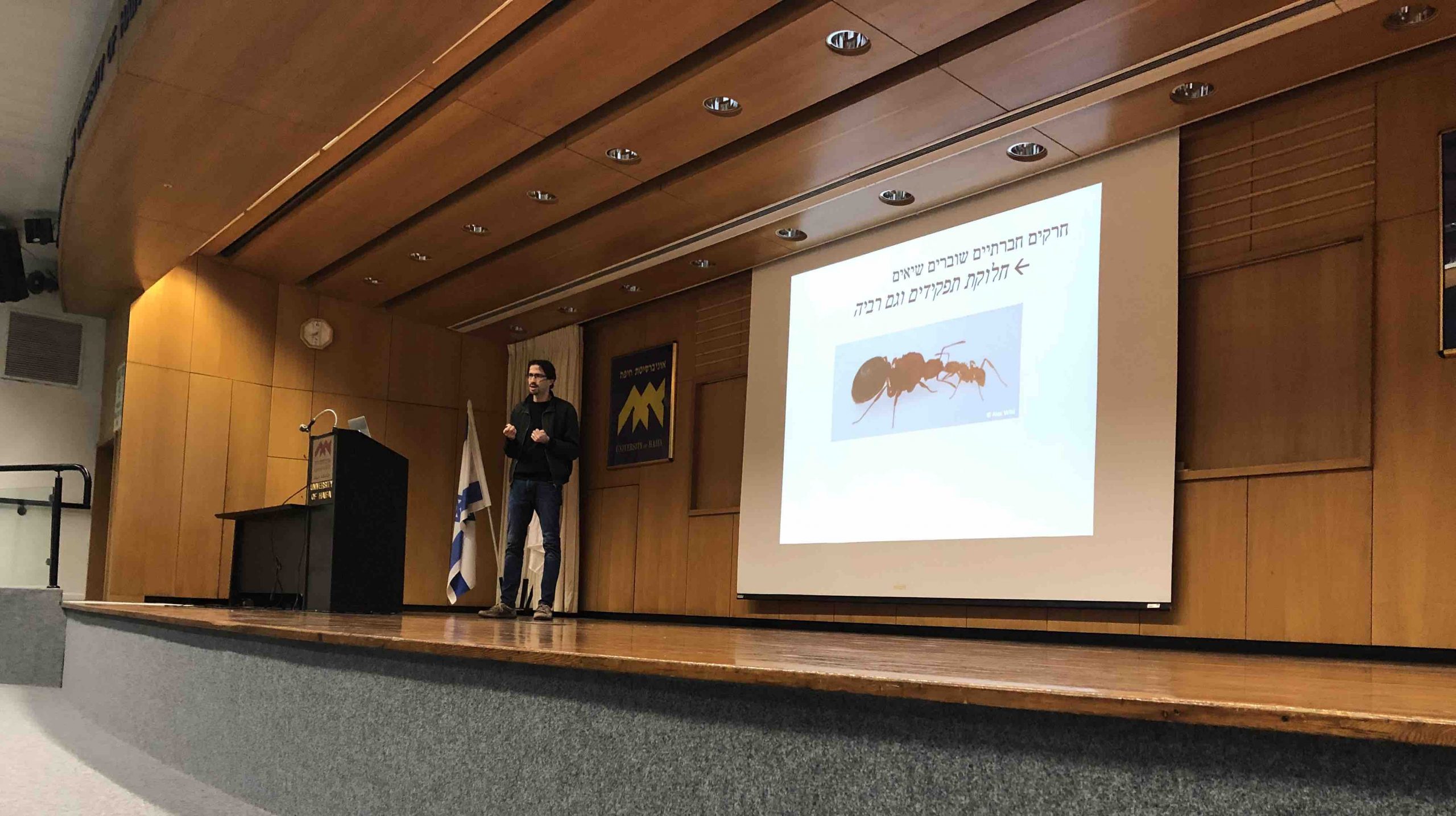
Darwin explained evolution through the principle of natural selection: every living creature, according to the law of the jungle, struggles against competitors in order to survive and pass its genes on to the next generation. Altruism, then, is a paradox. How did mutual aid, cooperation, and sociality evolve? Darwin understood this challenge and devoted a chapter in his book to discussing the problem and searching for a solution to the paradox. This is the beginning of a journey that Darwin set out on in the 19th century with the help of surprising animals – different species of ants in southern England. Today, the genomics revolution makes it possible to find the answer to the paradox in the genes of ants and other social insects.
Does time tick at the same rate for everyone and everywhere in the universe? Is there a way to influence the structure of space and time? What are the building blocks of spacetime, and are we actually holograms? In the session I will tell about the development of physical ideas on the nature of spacetime from Newton through Einstein to more modern ideas from string theory. Along the way we will also talk about black holes and quantum mechanics.
The 2017 Nobel Prize in Physics was awarded for the direct detection of gravitational waves, achieved about a year earlier. The information carried by these waves is fundamentally different from that which has served us since ancient times to study the universe around us, and opens a new window to understanding it. In particular, the discoveries of the past year make it possible to locate black holes and other dark objects at the edge of the universe, to learn how they were formed, and even to understand the implications of their existence for our everyday lives (for example, their effect on the price of an ounce of gold). In this lecture we will survey the scientific development over recent centuries that led to the concept of black holes and gravitational waves, and we will get to know the advanced technology that led to the discoveries. We will also survey the discoveries of the past year and their importance for understanding the universe in which we live.